Prince Albert Highlanders Pipes & Drums

P.A. Caledonian Society Robert Burns Supper

Home
About Us
Contact Us
Book a Performance
Repertoire
Our Music Book
Our Uniform
Photo Gallery
Learn to Play
Piping Humour
Potential Sponsors
Burns Supper 2010
Links
etiamnum.jpg

 
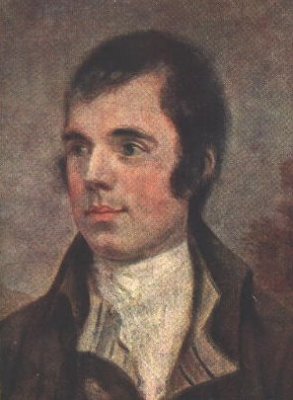
The Prince Albert Caladonian Society is proud to announce that it will be hosting the 209th annual Robert Burns supper on January 22, 2010.
 
Come join in this celebration of Scottish culture, food, tradition, and entertainment.
 
Tickets are $ 30. (to be confirmed)
 
Cocktails begin at 7:00 pm - Supper & festivities to begin at 8:00


burns.jpg

A couple of examples of the Toast to the Lassies and the Immortal Memory can be found below:

Toast to the Lassies...by Michael McLaughlan
caledonialogo.jpg
I asked my wife the other day what she liked best about me; my firm, trim body or my intellect. She said, "Your sense of humour dear."

In writing this toast to the lassies, I couldn't help but notice the differences between lads and lassies, not the obvious differences that make them so pleasing to the eye, but the more subtle differences, such as:

- A successful man is one who makes more money than his wife can spend. A successful woman is one who can find such a man.
- Men believe they have the last word in arguments, but actually women have the last word. Anything a man says after that is the beginning of a new argument.
- A man has six items in his bathroom: a toothbrush, shaving cream, razor, a bar of soap, and a towel from the Holiday Inn. The average number of items in the typical woman's bathroom is 337 and a man would not be able to identify most of these items.
- And finally, children. A woman knows all about her children. She knows about dentist appointments and best friends and favourite foods and secret fears, and hopes and dreams. A man is vaguely aware of some short people living in the house.

But regardless of the differences that separate men and women, we are not complete without them and I have prepared the following toast, with the assistance of the same muse that aided Robbie Burns.

A Toast to the Lassies

Gentlemen, please rise...

Together we stand, here in praise
For the women around us and in our days,
Like Robert Burns, he once knew
That we love our lassies, though he had more than a few

When in our arms, they bring us untold pleasure
These are our lassies, for they are a true treasure,
We seek to marry them, it is said
For nothing more than to get them to ... wed.

They feed our spirit, they feed our soul
For many of us, they fill our bowl.
They care for us, they keep us well
Though occasionally, they make it feel like ... heaven.

They teach us manners, they teach us style,
For many of us, that takes quite a while.
They improve with age, while we do not
For that is clear, looking at you lot.

For the parcel of rogues, I see here tonight,
It is truly amazing, our lassies don't take flight,
For they put up with our habits, and we have all sorts,
Such as control of the remote and our preoccupation with sports.

For our lassies we would walk five hundred miles,
It must be because, of their feminine wiles.
Over heathery mountain and scroggy glen
We seek them out now and then.

But,
Tonight we stand, here in praise,
So join me lads, let your voices raise.
Prepare to toast, fill up your glasses,
Join me now, to our bonnie lasses.

To the Lasses !

THE IMMORTAL MEMORY

BURNS: THE BARD AND TRADITION


Presented by M. and S. Holash

Prince Albert Caledonian Society

Annual Burns Supper, January 20, 2007

Rev. Dr. R.M.A. Scott


When Sandy asked us to consider speaking to the memory of Robert Burns he suggested we could reflect on Burns’ love songs.  He thought Burns’ love songs would be a perfect topic for us because Sandy knows Mitch and I have a passion for music.  He also said the love songs of Burns might be of interest to us because he has never seen two people who have been married as long as we have who are still passionately in love with one another.  (We are going to start making sure the blinds on our windows are closed).  Tonight we are going to present three love songs to you, with the help of Alexandra, but we are not interested in them primarily because they are love songs but because they come from an old oral tradition, yet these songs are still a dynamic part of our culture. 


Telling stories and singing songs are an important part of life in an oral culture.  Like Burns we live in a time of transition.  Scotland in Burns’ day was changing.  Oral traditions dominated the countryside and farming life.  Urban life on the other hand was more and more dominated by the printed word and literacy.  Burns was an artist who straddled both an oral and literate culture.  He wrote his songs and poems from material he had gathered from an oral tradition.  Gathering, saving, improving upon and writing songs from the Scottish tradition was his single most important contribution to Scotland and us. 


Burns was born in born at Alloway in the southwest of Scotland on 25 January 1759, the eldest of seven children to William Burnes and Agnes Brown (or Broun) who were tenant farmers.  Like some of us he grew up in a farming community.  In his day stories were not read from books and songs were not learned from sheet music or hymnbooks.  Enchanted tales of witches, spirits and haunted places were passed on by word of mouth and songs were sung and learned while working in the field.  While his culture and context were oral, Burns received a good education because of the effort and determination of his father.  At the age of 14 he showed his talent.  While harvesting in the summer of 1773, he found himself working alongside a girl his own age who kept singing the traditional song, I am a man unmarried.  Burns fell in love with the girl and within a few days produced a naïve but beautifully crafted lyric in honour of her, designed to go to the same tune.  The song is now a standard in Burns collections under the title Handsome Nell.


Life changed for Burns in the summer of 1786.  For what were reasons of scandal, he decided to emigrate to Jamaica to begin a new life.  As a farewell present his friends subscribed to a printed collection of his poems, the now famous “Kilmarnock Edition.”  The book was an immediately a success because Burns was the right man, in the right place at the right time.  Scotland in the late eighteenth century was struggling to preserve its cultural and national identity.  In the late eighteenth century Scotland was effectively dominated by English rule.  In 1603 the English and Scottish crowns became one under King James the IV of Scotland or James I of England.  In 1707 the parliament of Scotland was disbanded in favour of a larger parliament based in London.  Political and economic powers were in the hands of the English and all the Scots had left to assert national identity was their history and culture (sound familiar – i.e. Canada and the U.S.?).  Burns book of poems, the “Kilmarnock Edition” created cultural and nationalist ripples through the country and as a result he was invited to visit Edinburgh.  From the autumn of 1786 to the summer of 1788 he lived in Edinburgh.  His sojourn there changed him.  Already a proficient fiddler he was introduced to classical music.  He attended concerts, met accomplished musicians and most importantly the music publisher James Johnson who he collaborated with to write and publish the six volumes of The Scots Musical Museum.


Most importantly, in Edinburgh he became acutely aware of the movement to preserve Scottish cultural identity.  The scholar, Ellen Brown in her book Burns and Tradition, writes: “The cultural nationalists looked to the past and to the countryside.  Their interest was antiquarian and pastoral.  They greeted Burns as a rustic voice of Scotland…” (p. 27)  In Edinburgh Burns realized the oral tradition he inherited as a tenant farmer contained gifts of identity that the Scottish people of his time were searching for.  Burns wanted to help preserve Scottish cultural identity and become Scotland’s national Bard, or poet laureate.  So Burns began to excavate and mine the tradition of Scottish folk music.


The literati of Burns’ time had labelled the music of peasant people as uncreative and unimportant.  Folk songs had been collected and published, but no one had the depth of knowledge and understanding of Scottish folk music that Burns had.  He collected sayings, stories and songs wherever he went in an effort to preserve them.  Our first example is one of Burns’ most famous love songs, “My love is like a red, red rose.”  It said he first heard it being sung by a young woman working in the field.  After he collected the song Burns added words to it and improved it.  Eventuarlly he “gave the song to Scots singer Pietro Urbani who published it in his book Scots Songs. In his book, Urbani claimed the words of The Red Red Rose were obligingly given to him by a celebrated Scots poet, who was so struck by them when sung by a country girl that he wrote them down and, not being pleased with the air, begged the author to set them to music in the style of a Scots tune, which he has done accordingly. In other correspondence, Burns referred to it as a "simple old Scots song which I had picked up in the country.””


Burns takes the image of a beautiful red rose blooming in June to evocatively express the feelings a lover has for his beloved.  Until the seas go dry, rocks melt under the blaze of the sun, and the sands of time run out, his love shall last.  The final verse ends in a good-bye and promise that the lover will return to his beloved.  Set originally to Neil Gow’s tune “Major Graham,” it has come to us from Robert Archibald Smith’s song collection Scottish Minstrel where the words were paired with the tune “Low Down in the Broom.”   Alexandra will now sing for us, “My Love is Like a Red, Red Rose.”


In Burns time there was no such thing as copyright.  Burns was part of living and dynamic oral music tradition.  He would collect tunes, words and parts of songs.  If he felt he must he would edit and improve on the words or he would write a new song for a tune.  Being part of a living tradition meant that some of the songs Burns wrote were completely reworked by other writers as well.  The song, Charlie he’s my darling, was a political love song written by Burns to celebrate the prowess and sexual exploits of Prince Charles Edward Stewart, the leader of the failed highland rebellion of 1745. 

"Prince Charlie," the young Chevalier or Young Pretender, raised his standard at Glenfinnan, in August 1745 and initiated the Jacobite Rebellion.  Through his father’s line Prince Charlie was the rightful heir to the thrones of Scotland and England, and he had returned, with the supposed support of the French to claim the thrones.  Many highlanders pledged their allegiance to Prince Charlie’s cause. The campaign lasted through the winter and though his army reached as far south as Derby, and put the English in a panic, by early in 1746 he was back in Scotland.  Charlie and his forces were defeated at Culloden Moor on April 16, 1746.  The defeat was a profound blow to the Scottish nation.

The Jacobite cause was kept alive and romanticized in songs like “Charlie is my darling.”  In Burns’ version of the song Prince Charlie’s appeal and sexual prowess are celebrated.  When Charlie arrives in a highland town and proceeds up the high street he sees a young lass watching him through a window.  Charlie heads into the building, up the stairs to the room of the young woman, she lets him in, and they begin a romantic involvement.  The final verse declares that whether you are on a heather covered mountain, or in a rocky glen, there is no sense in going out because of Charlie and his men.

In the years following Burns’ death in 1796, Carolina Oliphant, or Lady Nairn re-wrote the song.  Her family had supported the Jacobite cause in 1745 and had been stripped of their land and titles by the British crown after the defeat at Culloden.  But in the early 1800’s it was becoming fashionable in Scottish society to romanticize Prince Charlie and the Jacobites.  Lady Nairn’s version of this song tells of how Charlie comes to town, marches up the high street with bagpipes playing and people coming to see him.  Among those who line the street to see Charlie are men ready to fight for his cause and Scotland’s freedom.  These are men with wives and children, ready to do what is right for the nation.  In Lady Nairn’s version Prince Charlie and his men are not going through the countryside having their way with women.  Lady Nairn’s Charlie and his fighting men were patriots, loyal to their country, their wives and girlfriends.  Lady Nairn’s song was more appropriate for an emerging Victorian Scotland.

Lead by Alexandra together we will sing “Charlie he’s my darling.”  The words are printed on a sheet at your tables.

Burns’ words and music came from a living and dynamic tradition that still has an impact on the culture of our own time.  The song “Comin Thro’ the Rye,” is said to have been a bawdy song that Burns collected and sanitized for a larger audience.  In the song a young woman is traditionally pictured as coming through a field of wet rye.  Her dress is lifted as she walks and her petticoat becomes wet.  The poet asks, if a body, were to meet a body coming through the rye does the world need to know if they kiss?  The words are simple, the tone is melodious and the song almost sings itself. 

In 1951 this song became the climax and the inspiration for the title of J.D. Salinger's novel Catcher in the Rye.  What makes the novel classic literature is the plain fact that there's a bit of novel’s main character Holden Caulfield in all of us. Holden leaves his prep school and roams New York City for several days trying to make sense of his world that is full of phonies and people who depress him. He is poised at the edge of entering adulthood.  In this novel Salinger devastatingly recreates what it means to be young.  Listen to this excerpt from the book where Holden speaks to his ten year old sister Phoebe about his thoughtful reaction and insight to Burn's poem:

"You know that song 'If a body catch a body comin' through the rye'? I'd like -"
"If 'If a body meet a body coming through the rye!'” ten year old Phoebe said. “It's a poem by Robert Burns."
"I know it's a poem by Robert Burns."
"She was right, though. It is 'If a body meet a body coming through the rye.' I didn't know it then, though."
"Anyway, I keep picturing all these kids playing some game in this big field of rye and all. Thousands of little kids, and nobody's around - nobody big, I mean - except me. And I'm standing at the edge of some crazy cliff. What I have to do, I have to catch everybody if they start to go over the cliff - I mean if they're running and they don't look where they're going I have to come out from somewhere and catch them. That's all I'd do all day. I'd just be the catcher in the rye and all. I know it's crazy, but that's the only thing I'd really like to be. I know it's crazy."

On a street of New York City Holden and Pheobe have heard a young boy singing “Cumin Thru the Rye.”  Hearing the song Holden has an epiphany even though he has heard the boy singing the wrong words.  Pheobe notes the mistake and corrects it, saying it is not “if a body catch a body,” but “if a body meet a body.”  But it is to late, Holden has already imagined himself to be a hero standing on the edge, catching kids coming through the rye and not seeing where they are going, from falling off the cliff.  Burns’ song for Holden has become symbolic imagery about where he is in his life, an image of a young boy on the curbstone of life plunging helplessly and irreversibly into adulthood. Once the reader can see that this is a coming of age story the rest of the book comes to light.

Alexandra sings “Comin Thru the Rye.”

Burns becomes Scotland’s Bard because he helps capture and preserve something of the people, their language, song and culture in a time when it is under threat.  He has been shaped by an oral tradition and he knows the culture and music of his people because it has been part of his life since he was a small child.  When he begins to formerly collect and write songs he draws deeply from the well of oral tradition he inherited.  Burns helps preserve a tradition while at the same time he improves it, adds to it and becomes part of it.  His art, poetry and music become part of the living tradition of Scotland and the English-speaking world.  Maybe what is most dramatic is the way his life becomes a legendary part of the tradition.  Tonight we celebrate the genius and legend of Burns.  Friends please be upstanding with us as we toast the immortal memory of Robbie Burns.


A Toast to the Lasses

Thanks for visiting our site!